Reflection 1: Exploring Digital Literacy Frameworks in Week 4
Until this week, I had never really had taken the time to think about what digital literacy is or what digital literacy skills I have. I use digital tools every day for school, work, and personal projects, but I’ve never stopped to truly reflect on what digital literacy means, what I actually know, and where I need to improve.
After watching Valerie Irvine’s lecture on Digital Literacy Frameworks and reading through the K-12 Digital Literacy Framework, I realized that a lot of what I know about digital literacy came from what I learned in high school. However, a lot of my digital literacy skills also come from life experiences outside of school—such as growing up as an athlete and learning how to create content for Instagram to grow my personal brand and collaborate with companies.
I also feel like the landscape of digital tools and expectations has changed so much since I was in high school just a few years ago. Digital literacy is constantly evolving, as new digital tools emerge every year. Valerie even mentioned in her lecture how much has changed recently with AI, which really made me understand that while I feel pretty digitally literate now, there will always be new things to learn and adapt to as technology continues to evolve.
As I went through the K-12 Digital Literacy Framework, it was interesting to reflect on where I feel confident and where I need to improve in my digital literacy skills.
What I Need to Improve:
Looking at the K-12 Digital Literacy Framework, I recognized a few areas where I don’t have much experience or knowledge:
- Programming and Coding
One of the things under Critical Thinking, Problem-Solving, and Decision-Making was that a digitally literate person should be able to “program ranging from using block-building code tools to a high-level programming language” (BC’s Digital Literacy Framework, 2013).
This is an area where I have zero experience. Growing up in Whistler, we only had one computer programming class available in Grade 12, and I never took it because it didn’t interest me. When I started university, I continued to avoid taking any computer programming classes because I had no idea how to do it and assumed I would suck at it—even though it was a highly recommended elective in my first year of business.
Through learning about digital literacy this week, I’ve started to realize that I should stop ignoring computer programming, as it could be a very useful skill in my future.
- General Knowledge and Functional Skills in Technology Operations
Another area that stood out to me as something I am not very confident in was under Technology Operations and Concepts, where the framework discusses that a digitally literate person should “understand the different parts and components of a computer and/or other digital devices and can solve problems by decomposing them into smaller parts” (BC’s Digital Literacy Framework, 2013).
While I am comfortable with technology and am confident in using it as I use it every day, I have never learned about the different parts of a computer and how to successfully take them apart. If something ever breaks with my technology, I normally try looking it up on Google or going to a professional for help.
Biggest Takeaway: Digital Footprint and Reputation
One of the biggest takeaways I got from this week’s material was the importance of digital footprints and specifically Valerie’s point about how digital footprint expectations vary depending on your career path and how far along you are in your career.
This is something I hadn’t really considered before. I have a good understanding of why a positive digital footprint matters, but I found it really interesting that the “rules” for what’s acceptable online are different depending on who you are and what industry you are in.
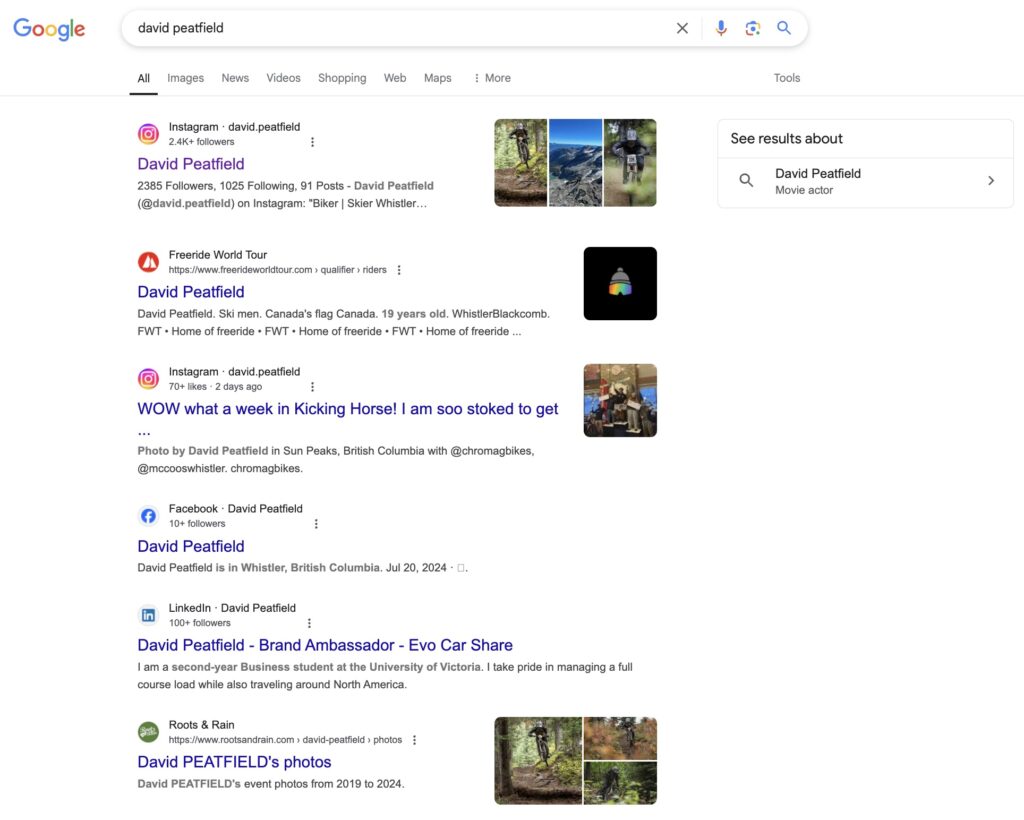
After learning this, it made me wonder what my digital footprint was like, so I searched up my name on Google, which is something I have not done in a long time. What came up did not surprise me at all, and it was pretty much exactly what I expected. My Instagram showed up, along with various other websites related to my skiing and biking. Many of these websites track results and keep points for skiing.
Learning more about digital footprints and taking the time to search myself up was one of my favorite things from this week’s learning, and I am happy to see that I believe I have a positive digital footprint for what my interests are and the possible careers I could go into in the future.
Final Thoughts
This week’s learning of digital literacy frameworks has given me a better understanding of what I know and where I need to improve. While I feel confident in many areas, I now recognize areas that I need to improve, particularly in programming and technical skills. At the same time, learning more about digital footprints made me reflect on how my online presence aligns with my future career aspirations. As technology continues to evolve, so will the expectations for digital literacy, which has made me realize that it is important that I keep learning and adapting to ever-changing technology so I do not fall behind. Moving forward, I will do my best to not avoid aspects of digital literacy that I am not confident in and do my best to always be learning more and improving.
References
BC’s digital literacy framework. (2013). https://www2.gov.bc.ca/assets/gov/education/kindergarten-to-grade-12/teach/teaching-tools/digital-literacy-framework.pdf